

Sciurus carolinensis
Key Facts:
Colour: Varying in brown / grey
Adult Size: up to 10 in in height
Lifespan: 10 years
Where: Very common, any area with an abundance of trees, such as forests and parks
Description
Colour Variation
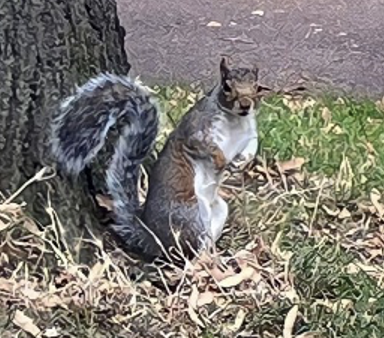
Despite being dubbed grey squirrels, this species can be born in a variety of colours. Although it is less common, nature will occasionally paint them in varying tones of brown or black.
Underbelly and Size
Amidst this diversity, they will all typically share the same white or cream underbelly, like a shared fashion statement among them. In terms of stature, they measure up to 10 inches in height, boasting a cute and fluffy tail of the same proportions, useful for balance.
Adaptation, Diet and Gardening Skills
They are experts of adaptation, able to thrive in both rural and urban environments, which is in part due to their culinary flexibility, their diet consists of nuts, fruits and the like along with small insects and invertebrates. They aren’t just consumers; they’re also natural gardeners, dispersing seeds to assist in germination.
Physical Abilities
They’re also remarkably strong animals for their size, these agile acrobats can easily climb and leap across trees like a leaf in the wind thanks to their powerful claws and long tails. This makes it a piece of cake for them to find a spot to store their food for winter, which can be an underground hideout, or in the cozy hollow of a tree if they want somewhere a little harder to reach.
Communication and Survivability
Not only are they great climbers, they are also pretty proficient swimmers, thanks to their light frames and strong limbs. Grey squirrels love to chatter with others, like neighbours over the fence. When a threat is detected, they may bark to warn each other about an approaching danger, just like a neighbour may alert you of a thunderstorm. Other noises include mating calls to attract a mate, or high-pitched chirps if they just wish to socially interact with each other. Males typically do not play a part in childcare, and since they are relatively independent animals, it makes it easier for predators like birds and cats to hunt them down, which prompts them to master the art of elusion.
Habitat
This is another species that is not native to the UK, originating from America. They became invasive species in the UK after being introduced in the 19th century. Now they are very common and can be found in any area with an abundance of trees, such as forests and parks, or even in your local neighbourhoods. They’ve truly managed to make themselves at home, haven’t they?
Lifecycle
A proud mother squirrel with typically give birth to 2 to 4 pups (the name given to baby squirrels) at a time. Have you ever wondered just what they’re like in their early weeks? Well, they’re like new recruits who are still missing some necessary skills, they will be unable to see and have smooth skin with no fur on their bodies, relying fully on their mother to provide milk to feed them. After multiple weeks have passed, they will have gone through an incredible transformation where their vision is much sharper with fur all over and start learning to communicate with their mother and siblings along with the start of necessary survival skills.
As the little learners gain new skills, they can begin venturing out of the nest with their mothers to learn even more about the secrets of survival. After 10 weeks, they are now capable of finding their own food as their climbing and jumping abilities reach new heights you wouldn’t believe. They can now embark on a new journey to find a partner, males will begin serenading with their unique calls and displays to attract a mate, who will join them in a nest to start a new family. If left alone by predators, they average a lifespan of a decade, demonstrating their strong will and resourcefulness.

This invasive species over-took the native Red Squirrels in the UK, which are now only found in a few remote locations around Scotland and the Isle of White.


 BioCapture